Singapore's first dedicated craft sake festival, SAKERAMA 2026, will officially debut on 25–26 July 2026 at 37 Tanjong Pagar Distripark. The two-day event aims to redefine the traditional sake experience by showcasing the evolution of the craft in a vibrant, high-energy festival atmosphere.
The festival is organized by the veteran team behind Sake Matsuri, Singapore's largest sake festival. The leadership team includes Sake Matsuri co-founders Adrian Goh and Kevin Ngan. Adrian Goh, Singapore's first Sake Samurai and Director of Inter Rice Asia, has spent over a decade serving as a strategic bridge between heritage Japanese breweries and Southeast Asia.
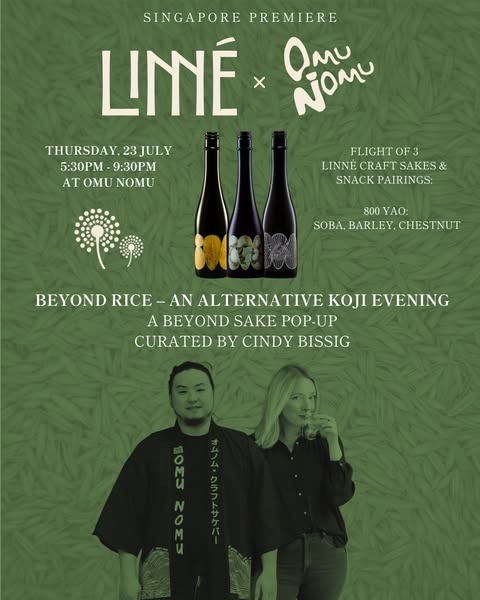
Serving as the festival's Ambassador of the Craft Sake Community in Singapore is Alex, a Master Sommelier of Sake and the founder of OMU NOMU Craft Sake & Raw Bar. As a leading voice for the global craft sake movement, Alex brings rare expertise to the event as a member of Japan's Doburoku Lovers Association and through his work with members of the Japan Craft Sake Breweries Association. Together, the founders and Ambassador have curated a selection of over 100 craft sakes from both elite heritage houses and innovative modern breweries.
What Is Craft Sake?
Craft sake is a modern, rice-based category of sake-adjacent brewing that emerged as a defined movement in 2021, using the foundations of traditional Japanese sake-making — rice, kōji, water, fermentation, and brewery craft — while deliberately stepping beyond the legal and stylistic boundaries of conventional seishu. This can include unpressed doburoku, co-fermentations with fruit, herbs, hops, botanicals or alternative kōji, lowerpolishing or table-rice expressions, and other experimental methods that do not fit neatly within standard sake classifications. At its heart, craft sake is not simply “small-batch sake”; it is sake brewing treated as a creative platform — rooted in Japanese fermentation, but freer, more diverse, and more open to regional ingredients, personal expression, and global influence.